
Ready to nerd out with us for a minute? 🤓
We already know breast milk is pretty incredible. It's packed with nutrients, antibodies, and bioactive components that help support a growing baby.
But researchers are continuing to uncover just how complex breastfeeding really is.
A new study published in February 2026 explored a fascinating question: Could breastfeeding be associated with how our genes function years later?
Let's Talk About Epigenetics (Don't Worry, We'll Keep It Simple!)
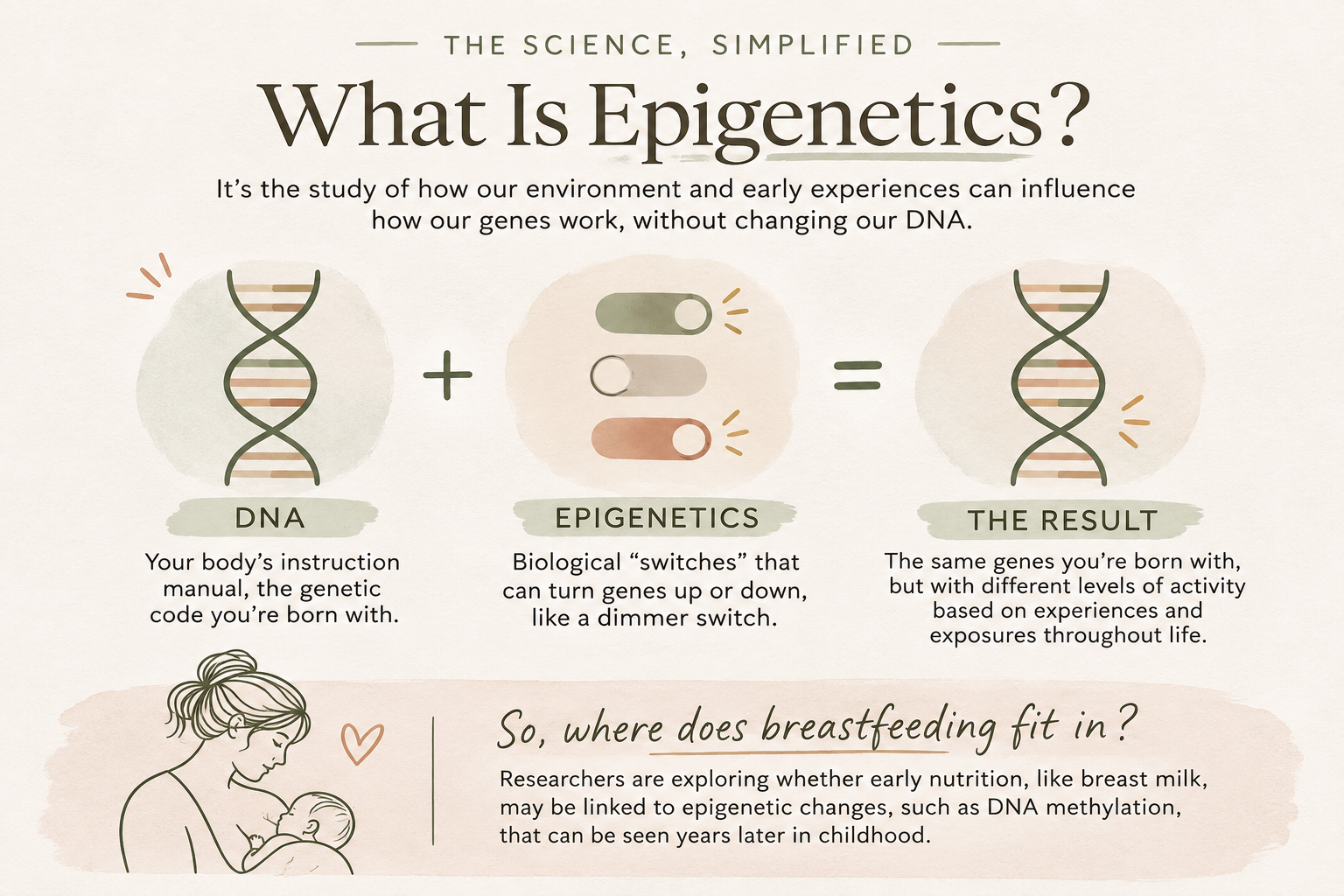
Think of your DNA as your body's instruction manual. You're born with those instructions, but your body has ways of controlling how they're used.
That's where epigenetics comes in.
Epigenetics refers to processes that help regulate gene activity without changing the DNA itself.
One of those processes is called DNA methylation, which involves small chemical markers attached to DNA that can influence how genes are regulated.
Researchers are interested in how early-life experiences, including nutrition, may be connected to these processes.
So, What Did Researchers Find?
In this 2026 study, researchers analyzed data from more than 3,400 children across 11 international studies.
They looked at breastfeeding duration and patterns of DNA methylation in blood samples collected when the children were between 5 and 12 years old.
Here's the interesting part! 👇
Researchers identified a small number of DNA methylation differences associated with how long children were exclusively breastfed. Some of these markers were located near genes involved in development and immune-related processes.
And these differences were observed years after breastfeeding had ended. 🤯
Now, does this mean breastfeeding changes your baby's DNA? No. DNA methylation doesn't change the DNA sequence.
And while these findings are exciting, they don't prove breastfeeding caused these differences or that they lead to specific health outcomes.
But they do open the door to more questions about how early nutrition may relate to development long after infancy.
Ok…What Does This Mean for Families?
We're still learning SO much about breast milk and the developing body.
We know breastfeeding provides important nutritional and immune benefits, but research like this helps scientists explore the biological processes that may be involved.
What's exciting about this research is that it suggests breastfeeding may have associations with biological processes involved in development, even years after infancy. While researchers haven't determined whether these differences lead to specific health benefits, the findings offer another interesting reason to keep exploring the long-term relationship between breastfeeding and child development.
It's also important to remember that this study doesn't establish a magic number of months to breastfeed or predict an individual child's health.
At Motherhood Untamed, we love digging into the science behind breastfeeding. But we also know that every feeding journey looks different, and research should help inform families, not add pressure.
The more we learn, the more we appreciate just how complex our bodies really are. And we're excited to see where the research goes next!
Want to dig into the science yourself? Read the full study published in Clinical Epigenetics here.
